


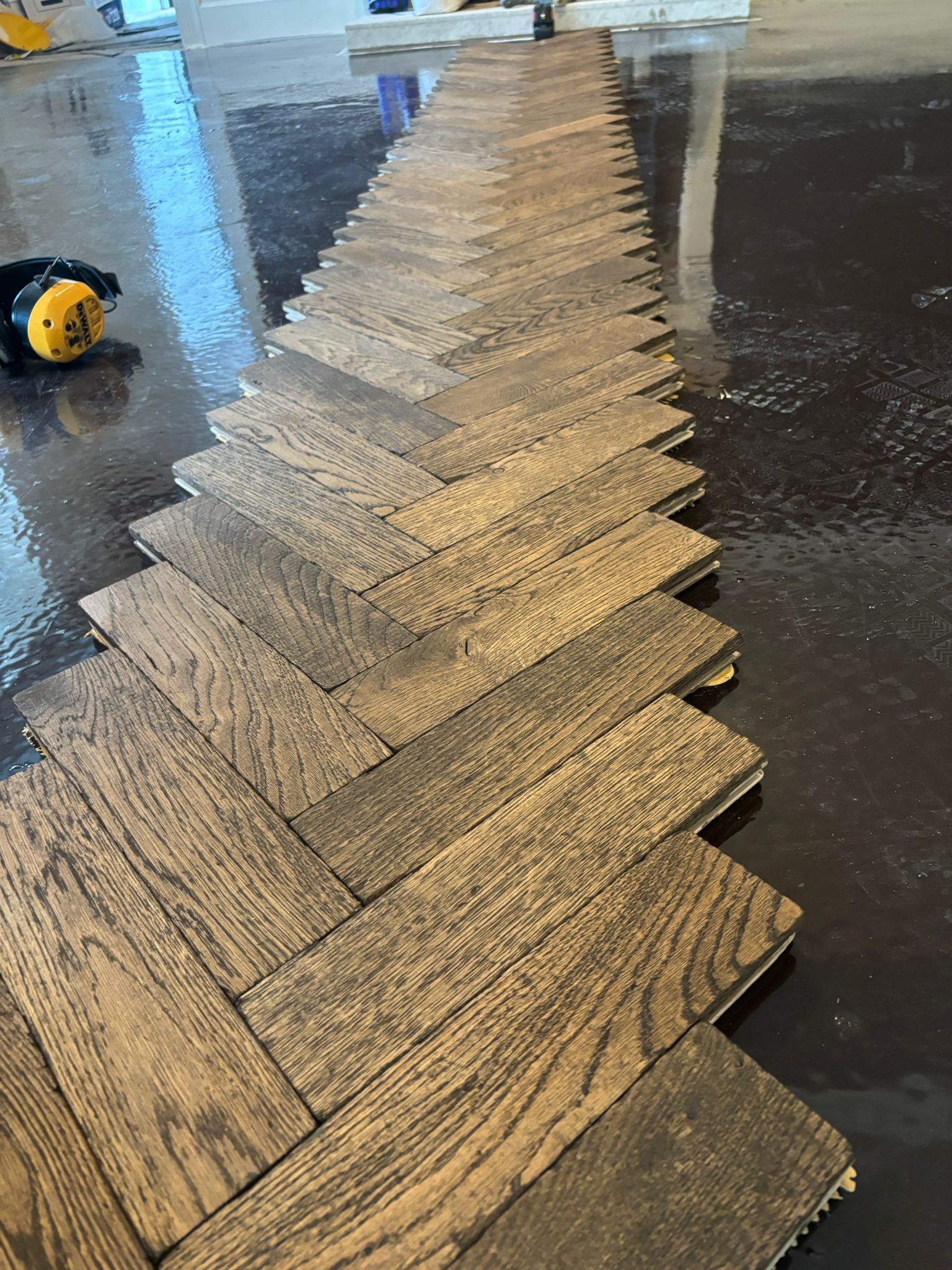
Deciding on the right wood flooring for your home isn’t always straightforward. Both engineered and solid wood have their merits, and the best choice depends on your specific circumstances, budget and the room you’re fitting. This comprehensive comparison will help you understand the key differences between these two popular hardwood flooring options.
Understanding the Basics
Before we compare these flooring types, it’s helpful to know exactly what makes them different.
Solid wood flooring is exactly what the name suggests: planks cut from a single piece of timber, typically between 18mm and 22mm thick. Each plank is completely solid throughout, from the surface you walk on right down to the bottom layer that sits on your subfloor. Common species include oak, walnut, maple and ash.
Engineered wood flooring takes a different approach. It consists of multiple layers of wood bonded together. The top layer, called the wear layer, is real hardwood (usually between 2mm and 6mm thick). This sits on several layers of plywood or high-density fibreboard, all pressed together in alternating grain directions. This construction makes the boards more stable and less prone to movement.
Both types give you a genuine wood floor with natural grain patterns and warmth underfoot. The difference lies in how they’re constructed and how they respond to different installation conditions.
Installation and Suitability
Where Can You Install Them?
This is where the first major difference becomes apparent. Solid wood floor fitting requires specific conditions. You’ll need a completely dry, level subfloor, and you cannot install solid wood directly onto concrete without first laying a timber subfloor. Solid wood doesn’t cope well with underfloor heating systems or rooms with high moisture levels like bathrooms, kitchens or basements.
Engineered wood flooring offers far more flexibility. The layered construction makes it dimensionally stable, meaning it can handle the temperature fluctuations from underfloor heating. You can install it on various subfloors, including concrete, and it performs better in rooms where moisture levels might vary. Some engineered products are even suitable for kitchens, though bathrooms remain off-limits for both types.
Installation Methods
Solid wood typically requires secret nailing or screwing through the tongue of the board into a wooden subfloor. This process takes time and skill, and professional solid wood floor fitting costs reflect this. You’ll usually need to leave expansion gaps around the room’s perimeter, and the boards need to acclimatise to your home’s environment for at least a week before installation.
Engineered wood flooring can be installed in three ways: floating (clicked together without adhesive), glued down, or secret nailed. The floating installation method is particularly popular because it’s quicker and more forgiving for DIY enthusiasts. Many engineered products feature click-lock systems that make installation relatively straightforward, though professional fitting still ensures the best results.
Maintenance Requirements
Daily maintenance is virtually identical. Both need regular sweeping or vacuuming to remove grit that might scratch the surface. Both can be damp mopped with appropriate wood floor cleaners – never soaking wet, just lightly dampened.
Oiled floors of either type need periodic re-oiling to maintain their appearance and protection, whilst lacquered floors can go longer between treatments. The real difference emerges when deeper restoration is needed.
Solid wood’s ability to withstand multiple sandings means scratches, dents and wear can be addressed more thoroughly. You can bring a tired 20-year-old solid floor back to near-new condition. Engineered floors with thin wear layers don’t offer this option. Once the surface is worn, your choices are more limited – perhaps a light screen and recoat if the wear layer allows, or eventually replacement.
Both types can suffer water damage if subjected to standing water or excessive moisture. Neither is waterproof, though engineered wood’s construction makes it slightly more forgiving of brief moisture exposure.
Environmental Considerations
Both flooring types use real wood, so sustainability depends largely on responsible sourcing. Look for FSC or PEFC certification regardless of which type you choose.
Solid wood uses more of the valuable hardwood resource per square metre. Each plank is entirely slow-grown timber. Engineered wood makes efficient use of hardwood by using it only for the visible top layer, with faster-growing softwoods or managed forest products for the lower layers.
Manufacturing engineered boards requires adhesives and more processing, which has environmental implications. Solid wood’s simpler production has a smaller carbon footprint at the manufacturing stage.
The longevity factor matters too. A solid floor lasting 100 years with minimal material input beyond periodic sanding and refinishing could be seen as more sustainable than replacing an engineered floor after 30 years.
Making Your Decision
The right choice depends on your specific situation.
Choose solid wood flooring if you have a suitable subfloor, you’re not installing over underfloor heating, you want maximum longevity with multiple refinishing opportunities, and you have the budget for both materials and professional fitting. Solid wood floor fitting delivers a traditional, long-lasting floor that can become a permanent feature of your home.
Choose engineered wood flooring if you’re installing over concrete, you have underfloor heating, you need a floor in a room with variable moisture levels (but not bathrooms), you prefer quicker installation, or you’re working with a tighter budget. Engineered products offer excellent performance and appearance with more installation flexibility.
Some homeowners use both types strategically throughout their property. Solid hardwood flooring in living rooms and bedrooms on upper floors where conditions are stable, and engineered wood on ground floors with underfloor heating or over concrete subfloors.
Questions to Ask Before Buying
Before committing to either option, consider these practical points:
What’s your subfloor type? Concrete typically suits engineered better, whilst suspended timber floors work well for both.
Do you have underfloor heating? Engineered wood flooring is specifically designed to cope with this, whilst solid wood often isn’t recommended.
What’s your budget for materials and installation? Remember to factor in both elements – cheaper materials with expensive installation can exceed the cost of pricier materials that install quickly.
How long do you plan to stay in the property? If this is a forever home, solid wood’s longevity might appeal. If you might move in five to ten years, engineered’s lower initial investment could make more sense.
Can you maintain stable indoor humidity? Solid wood performs best when indoor conditions remain relatively consistent year-round.
Final Thoughts
Both engineered and solid wood flooring deliver beautiful, natural floors that add warmth and value to your home. Neither option is objectively better – they each excel in different circumstances.
Solid wood offers unmatched longevity and the satisfaction of a completely natural, traditional product. Engineered wood provides versatility, stability and easier installation whilst still giving you a genuine hardwood surface.
Visit showrooms to see both types installed and walk on them. Speak to professional fitters about what they’d recommend for your specific property. Check samples in your actual room to see how they look in your lighting conditions.
Whatever you choose, buying quality products from reputable suppliers and ensuring proper installation will serve you far better than choosing the cheapest option in either category. A well-installed wood floor, whether engineered or solid, transforms a room and provides decades of enjoyment.
The beauty of wood flooring is that you genuinely can’t go wrong with either choice – you’re simply selecting the version that best suits your practical needs whilst bringing natural warmth and character into your home.
Get in touch with us at Wood Flooring Specialist for more information.
